Haiti
In Haiti, our support directly benefited 6,736 people this year, while helping 234 women grow as leaders within their organizations and communities.

FO-RI | Carboneutre AYITI



Launched in 2022, the FO-RI | Carboneutre AYITI (FO-RI | Carbon-Neutral AYITI) program used agroforestry systems and participatory action research to help address the impacts of climate change and deforestation in the Baptiste region of Haiti.
Five years later, the initiative has come to an end, and its impact is clearly visible on the ground.
Since the program began, more than 100 farming families have helped restore 30 hectares of degraded land by establishing agroforestry systems that combine coffee or cocoa trees with fruit and forest trees.
Alongside these reforestation efforts, the project supported farmers in adopting agroecological and agroforestry practices that strengthen climate resilience and improve food security.
Action research was at the heart of the initiative. Through a partnership with the Faculty of Agronomy at the Christian University of Northern Haiti, farmers took part in assessing the fertility of their soils. Working alongside students and with the support of university professors, they contributed to agronomic studies, including biochemical analyses, to better understand soil conditions and identify the most appropriate practices for their farms.
This collaboration created a true space for learning, innovation, and experimentation, while laying out a solid foundation for the development of the region's cocoa sector.
During the final year of the program, 1,516 people from the eight member cooperatives of the Union des coopératives caféières de Baptiste (UCOCAB) (Union of Coffee Cooperatives of Baptiste) participated in 35 training and peer-to-peer learning activities designed to share and build on the knowledge generated through the action research process. The results of the soil analyses also inspired initiatives to produce natural fertilizers using organic matter and agricultural residues.
A workshop designed specifically for women provided an opportunity to discuss the challenges they face and identify ways to strengthen their participation in agricultural and cooperative activities.
As the program comes to an end, farmers in Baptiste now have new knowledge, better practices, and valuable collective experience to continue developing agroforestry systems that are more productive, resilient, and better equipped to meet future challenges.
We congratulate them on all they have accomplished and wish them continued success.
FO-RI | Carboneutre AYITI is funded by the European Union and the Organization of African, Caribbean and Pacific States (OACPS), through AgriCord.

Hats Off to the Trainers!
Since 2023, trainers Kettelie Bastien and Idamène Jinnah Delva have played a key role in the implementation of the FO-RI | Carboneutre AYITI program.
With expertise, enthusiasm, and dedication, they have designed and delivered training sessions to help UCOCAB members strengthen their agroecological practices while encouraging the active participation of women and young people.
Thanks to their commitment, the knowledge shared through the program has been translated into practical solutions that benefit farming families and their communities.
“My work is close to my heart because I believe that sharing knowledge is one of the best ways to help people move forward and contribute to the development of cooperatives and communities.”
- Idamène Jinnah Delva
“I enjoy training people who are interested in agricultural production and raising awareness about reforestation, environmental restoration, and climate change adaptation. Through this work, I contribute to the development of my region. My role as a trainer also allows me to support my family and four other dependants.”
- Kettelie Bastien
Remote Cooperation
Cooperation with Haiti continues, even though the current situation still prevents Agro-Innov Network volunteers from travelling to meet partners. This year, two volunteers carried out remote assignments in support of the Union des coopératives caféières de Baptiste (UCOCAB).
Cocoa Market Study
As part of the FO-RI | Carboneutre AYITI program, agricultural economist Guy Ducharme conducted a market study on cocoa.
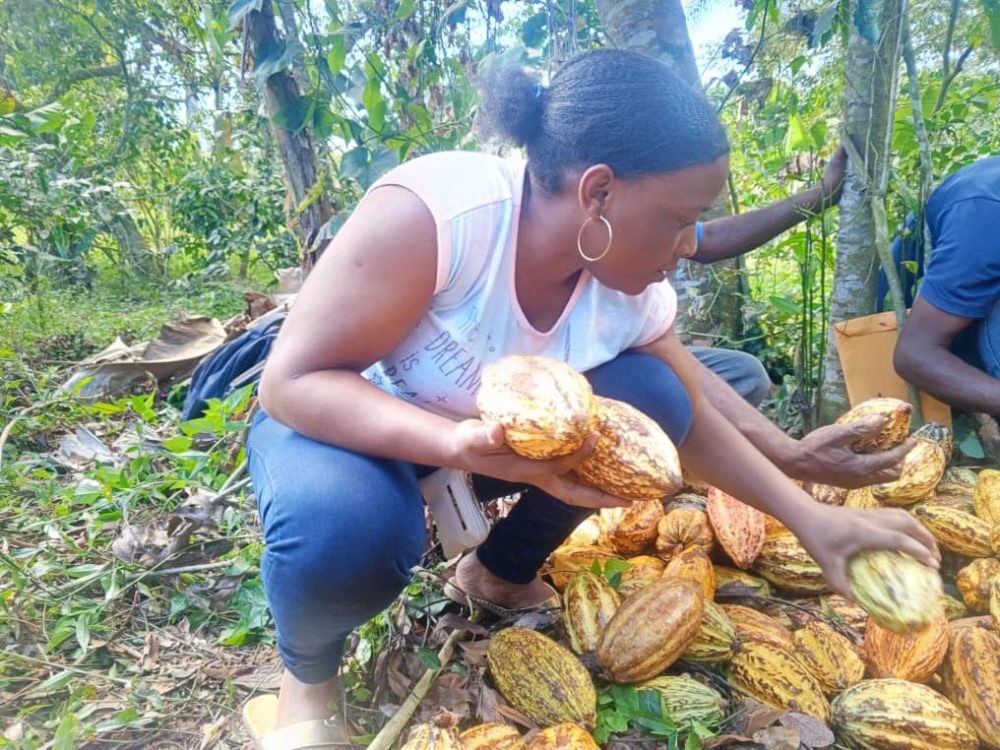
Recently introduced into the agroforestry systems established by UCOCAB, cocoa represents a promising opportunity for farming families to diversify their sources of income. The study's recommendations will help guide the cooperatives as they prepare for the production and marketing of cocoa once the first harvests reach the market.
Media Training
Meanwhile, photographer Michel La Rue trained UCOCAB members in photography, videography, and digital file management.
These new skills will help them better document their activities, share their knowledge and experiences, and promote their products to partners and potential buyers.
These two volunteer mandates show that even from a distance, sharing expertise can strengthen partner organizations and help them seize new opportunities. Thank you to Guy and Michel for their commitment and solidarity with Haiti!
Circular Economy
The circular economy program continues to thrive in Haiti thanks to the remarkable commitment of its partners and the communities involved.
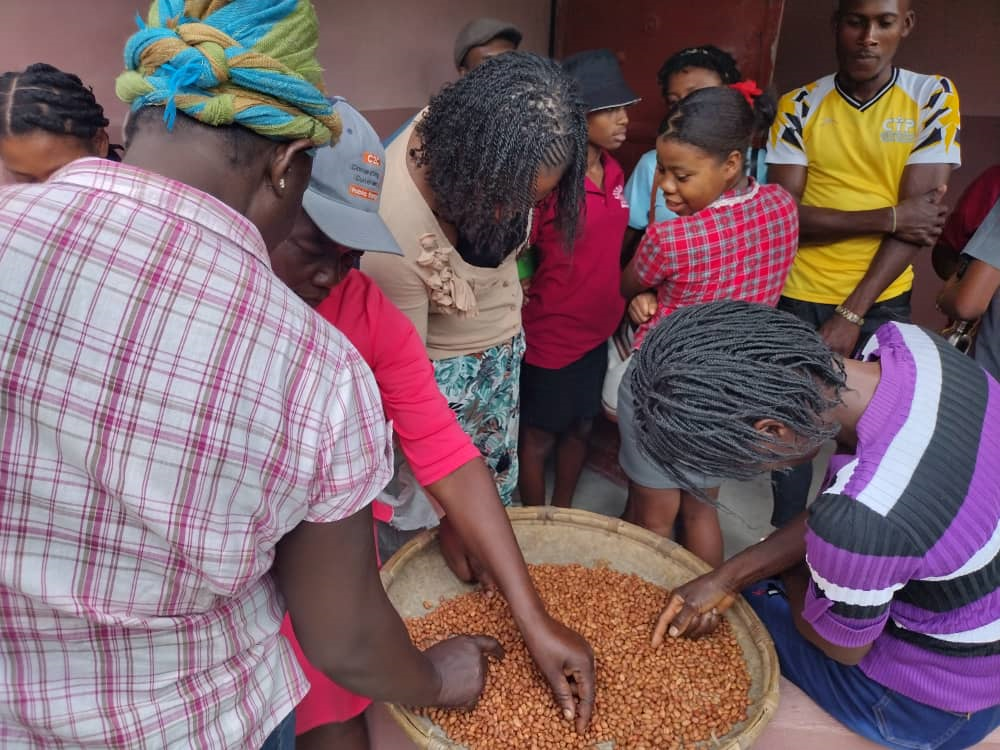
This year, 1,350 students received healthy, balanced meals prepared with locally sourced ingredients through school canteens serving seven schools. These canteens also provide employment for 43 women who, in addition to preparing meals, use the facilities for their own food processing activities to generate additional income.
Beyond maintaining day-to-day operations, this past year was marked by investments that will strengthen the program's impact in rural communities for years to come.
Modernized Infrastructures
In Boucan Moran, funding from the Louise Grenier Foundation made it possible to renovate the grain mill and cereal processing workshop operated by the Union des femmes du 6e Jamais-Vue. Women can now process and market local grains in facilities that are functional, hygienic, and safe.
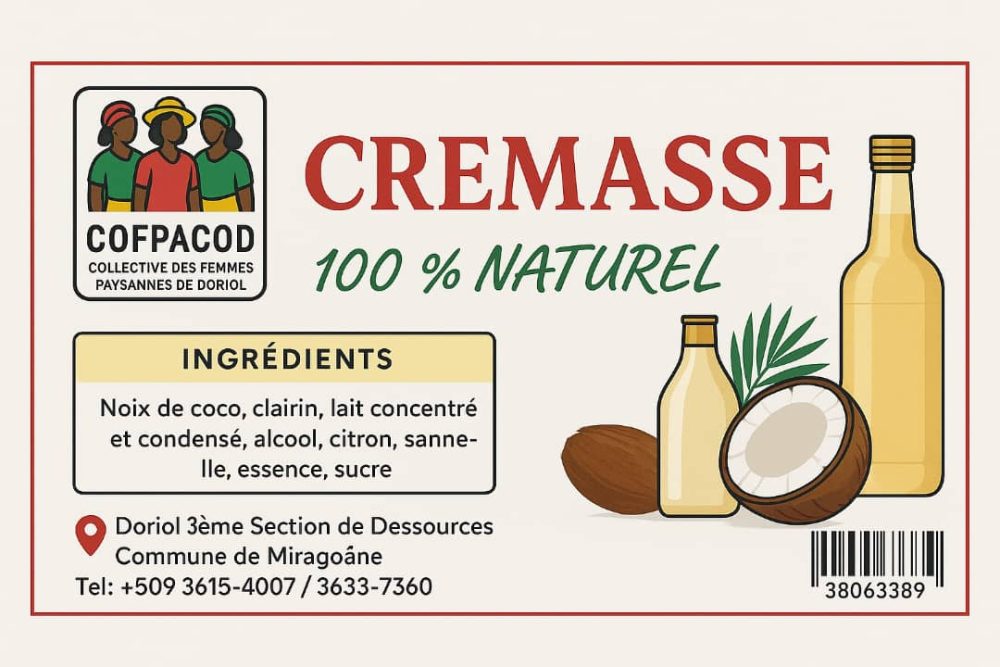
In Doriole, a new food processing centre now has access to water thanks to the support of the Roncalli International Foundation and Global Affairs Canada. The women entrepreneurs of the Collectif des femmes paysannes pour l'avancement de la communauté de Doriole (COFPACOD) now also have the tools they need to process and market their products.
Equipped to Grow Their Businesses
Alongside these infrastructure improvements, participants received training in food processing, management, marketing, and sales. This new knowledge supports both the operation of school canteens and the development of their own businesses.
By promoting local agricultural products, supporting women entrepreneurs, and feeding students, the program demonstrates how a circular economy can create lasting benefits for an entire community.
Together with its partners, UPA DI will continue to support rural communities in Haiti as they build a more resilient future.
UPA DI extends its heartfelt thanks to all its donors for their generous support of the Circular Economy Program.
Product labels created by the women of COFPACOD to market their processed food products.



MANYÒK ADAPTE AK KLIMA (SAGA 2)

In Haiti, cassava farmers in the Limbé region are taking part in an exciting new project.
MANYÒK ADAPTE AK KLIMA uses climate-resilient agricultural practices and an action-research approach to improve soil health, crop quality, and farmers' resilience to climate change.
Over the next year, 20 demonstration plots will be used to test different ways of growing cassava in rotation with corn, sweet potatoes, pigeon peas, and fruit trees. The lessons learned and results achieved will then be shared through knowledge-sharing activities in participating communities.
The project is being carried out in partnership with the Federation of Farmers' Groups of Limbé (FGPL) and the Centre d'éducation au développement intégré – Village d'Espoir (CEDI-VE), in collaboration with the Christian University of Northern Haiti.
Given the promising results generated through action research in previous initiatives, there is every reason to believe this new project will deliver meaningful benefits for farming families and their communities.